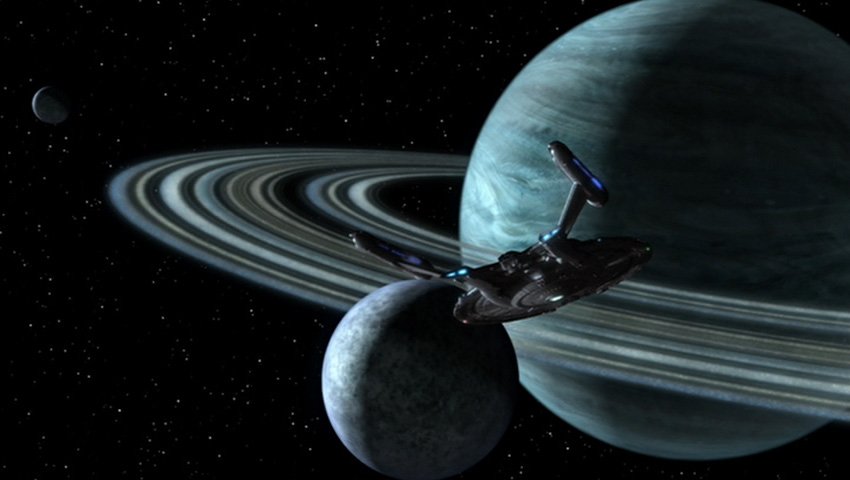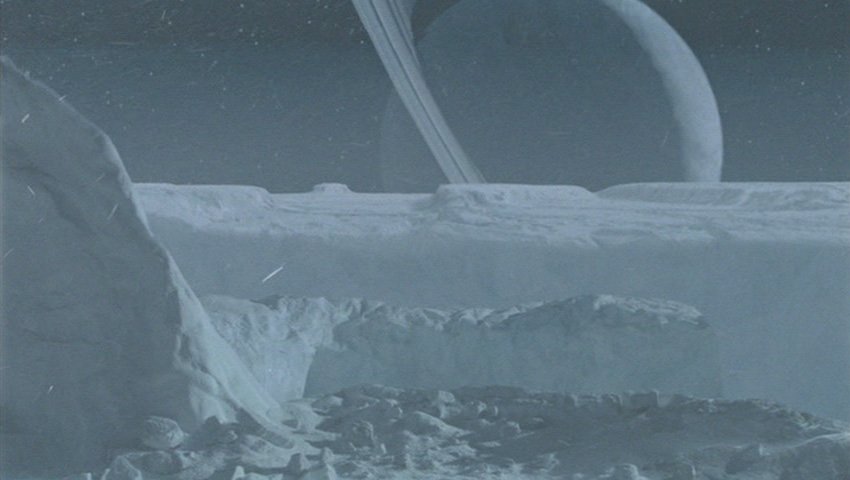
Andorians are a blue-skinned, antennaed, four-gender species from the icy moon Andoria (Andor), known for their martial discipline, intense emotional honesty, deep clan loyalties, and a complex reproductive system involving four sexes. They are one of the founding members of the United Federation of Planets, and their culture blends honour, passion, and precision into a distinctive civilization.
Andorians: A Complete Cultural, Biological, and Political Profile
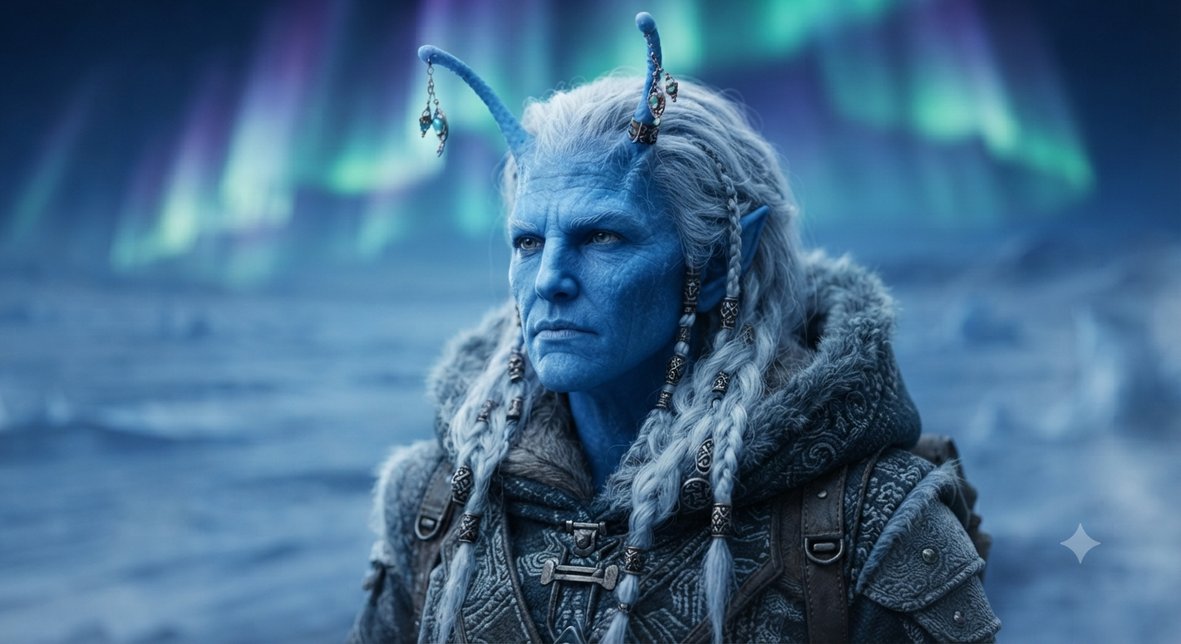
1. Biology & PhysiologyBlue pigmentation caused by copper-based blood chemistry.Antennae provide balance, emotional signalling, and directional hearing.
They can rotate, tilt, and retract slightly; damage causes disorientation and emotional distress.Cold-adapted physiology:Lower baseline temperature (~-28°C environment norm).
High resistance to hypothermia; low tolerance for heat.Rapid reflexes and high pain tolerance, contributing to their reputation as formidable warriors.
Subspecies:
Aenar — pale, telepathic, reclusive, pacifistic.
Andorians — the majority population, non-telepathic.
2. The Four Genders
Andorians have four sexes, each with a distinct reproductive role:
Thaan — primary fertilising male.
Chan — secondary fertilising male.
Shen — egg-producing female.
Zhen — gestating female.
All four participate in conception through the ritual shelthreth. This system shapes clan structure, marriage, politics, and inheritance.
3. Psychology & TemperamentDirect emotional expression — Andorians rarely hide feelings; antennae make deception difficult.
High-intensity affect — anger, loyalty, love, and grief are all powerful and openly displayed.
Competitive but honour-bound — disputes are resolved through ritual combat, negotiation, or clan arbitration.
Suspicious of secrecy — centuries of conflict with Vulcan made covert behaviour culturally distasteful.
4. Society & Clan Structure
Clans (keth) are the core of Andorian identity.
Each clan has its own traditions, colours, and political influence.
Shelthreth bonds create extended family units of four parents and their offspring.
Meritocratic hierarchy — rank is earned through service, skill, and honour.
Strong communalism — Andorians value collective survival over individual
5. Politics & Government
Andorian Empire (pre-2161):
Militaristic, efficient, and wary of Vulcan influence.
Governed by the Andorian Imperial Guard and a civilian council.Federation Era (post-2161):
Andoria becomes a founding member of the UFP.
Maintains strong representation in Starfleet and the Federation Council.
Advocates for firm defense, transparent diplomacy, and mutual aid.
6. Military Tradition
Imperial Guard — elite, disciplined, and fiercely loyal.Known for:
Shock troops
Reconnaissance specialists
Cold-environment warfare
Andorian officers are prized for tactical clarity, courage, and decisive action.
7. Religion & Philosophy
Andorian spirituality blends ancestor veneration, elemental symbolism, and ritual honour codes.
Each gender is associated with an element:
Thaan — Star
Chan — Fire
Shen — Water
Zhen — Earth
Aenar traditions add a layer of pacifistic mysticism and telepathic ethics.
8. Architecture & Environment
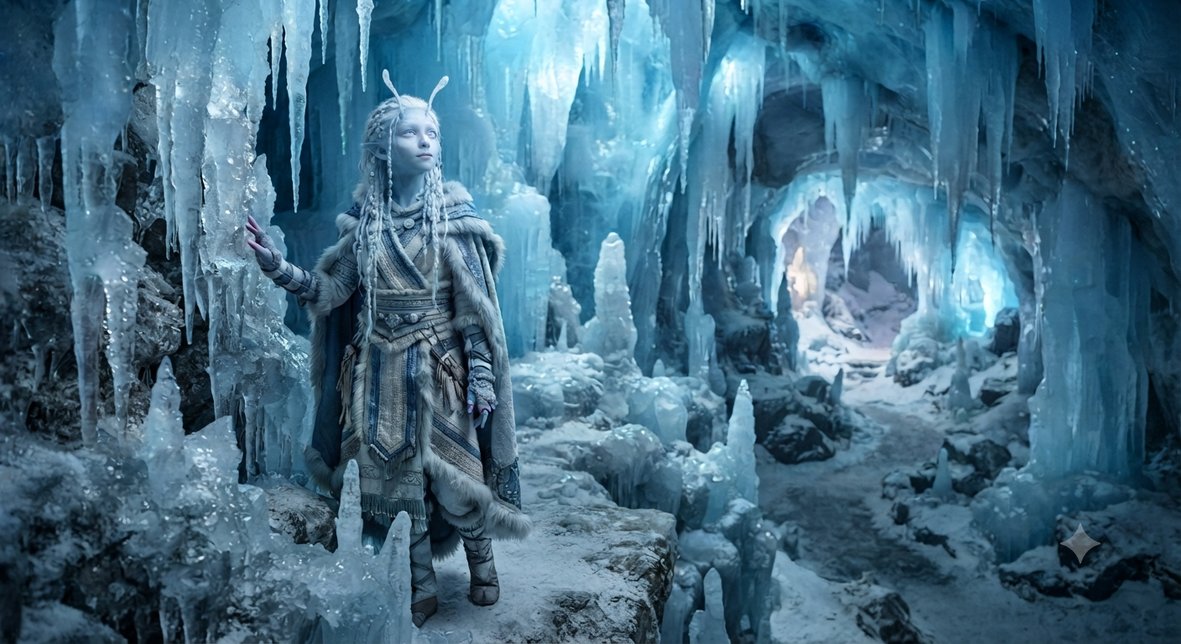
- Cities built into glacial caverns, ice tunnels, and subsurface domes.
- Aesthetic: crystalline geometry, bioluminescent lighting, and sharp angular forms.
- Heat is considered wasteful; buildings emphasize thermal efficiency and low-temperature comfort.
9. Interstellar Reputation
- Seen as honourable, intense, and uncompromising.
- Feared in battle, respected in diplomacy.
- Known for loyalty to allies and ferocity toward enemies.
10. Andorians in Starfleet
- Common roles:
- Tactical officers
- Security chiefs
- Pilots
- Command track
- Famous Andorians include:
- Thy’lek Shran — legendary Imperial Guard commander.
- Thelin — alternate-timeline Starfleet officer (TAS).
Andorians (and their Aenar cousins) have four distinct genders/sexes, each with a specific biological and cultural role. The short version: thaan and chan are the “male-aligned” sexes, zhen and shen the “female-aligned” ones — but each has a unique function in reproduction and Andorian identity.
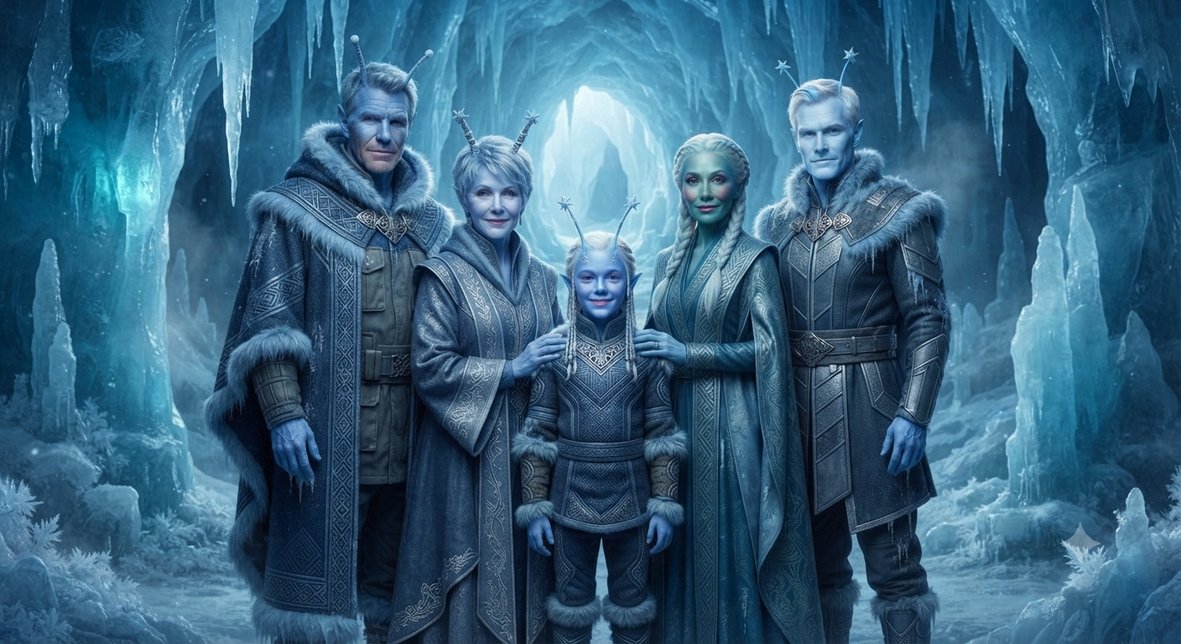
The Four Andorian Genders
- Zhen — The gestator.
Roughly equivalent to female. The zhen carries the developing fetus in a specialized pouch. In most sources, the zhen contributes no genetic material (though some novels suggest a small contribution). Zhens are culturally associated with strength and the spiritual element Earth.
- Shen — The originator.
Also roughly equivalent to female. The shen produces the egg and is the biological starting point of Andorian life. Shen are culturally linked to blood and the element Water. Physically and socially, shens and chans can appear androgynous.
- Chan — The second fertilizing sex.
Roughly equivalent to male. Chans are typically smaller and wirier than thaans. They provide one of the two male gametes needed to fertilize the shen’s egg. Culturally, chans represent passion and the element Fire.
- Thaan — The primary fertilizing sex.
Roughly equivalent to male. Thaans are larger and more muscular. They provide the first fertilizing gamete. Spiritually, thaans embody wisdom and the element Star.
How Andorian Reproduction Works (Shelthreth)
All four genders must participate in conception:
1. Thaan fertilizes the shen’s egg.
2. Chan adds a second fertilizing gamete.
3. The shen transfers the resulting zygote to the zhen.
4. The zhen carries the embryo to term.
This four-way reproductive bond is called the shelthreth, and it is central to Andorian identity, spirituality, and clan structure.
Andorian clan politics are a cold-world survival system built on four-gender reproduction, ancestral honour, and territorial prestige. Clans (keth) behave like political families, military units, and cultural nations all at once — competing fiercely, cooperating when necessary, and shaping every aspect of Andorian identity.
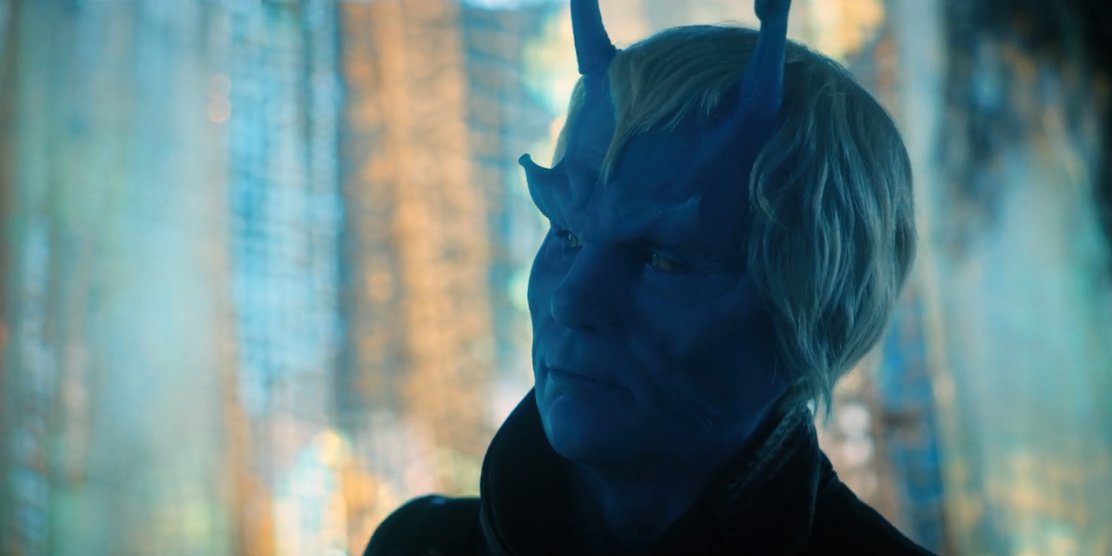
Andorian Clan Politics: A Complete Ethnographic Expansion
1. What a Clan (Keth) Actually Is
A keth is not just a family — it is a political organism.
- A keth includes multiple shelthreth units (four-parent households).
- Each clan has its own territory, ancestral ice caverns, ritual colours, and military traditions.
- Clans maintain archives, genealogies, and gender-balance registries to ensure reproductive stability.
The clan is the primary loyalty of an Andorian. The Empire and the Federation come after the keth.
2. The Four Genders as Political Assets
Because reproduction requires thaan + chan + shen + zhen, clans must maintain a stable gender ratio. This creates political behaviours unique to Andoria:
- Thaan alliances — prized for wisdom and leadership.
- Chan exchanges — used to cement inter-clan treaties.
- Shen negotiations — egg-rights determine inheritance lines.
- Zhen custodianship — gestation rights are sacred and politically powerful.
Clans with shortages of any gender must negotiate, trade, or form reproductive treaties with others.
This is the heart of Andorian politics.
3. Clan Hierarchies
Every clan has three major political bodies:
- The Hearth Circle — domestic leadership; manages gender balance and shelthreth bonds.
- The Spear Council — military leadership; commands clan militias and Imperial Guard liaisons.
- The Ice-Archivists — historians, genealogists, and legal scholars.
These three groups often disagree — but must maintain unity for the clan’s survival.
4. Inter-Clan Politics
Clans interact through a mixture of:
- Rivalry — territorial disputes, honour conflicts, military competition.
- Alliance — reproductive treaties, trade agreements, shared military campaigns.
- Prestige competition — who has the most decorated Guard officers, the most stable gender ratios, the most ancient caverns.
Some clans are known for:
- Warrior prestige
- Diplomatic subtlety
- Scientific excellence
- Aenar integration
- Shelthreth purity traditions
- Aggressive territorial expansion
5. Clan Warfare
Andorians prefer limited, honour-bound conflict rather than total war.
- Duels between champions
- Ritualised skirmishes
- Ice-arena combat
- Honour trials judged by Ice-Archivists
Full clan war is rare — and considered a failure of leadership.
6. Clan Politics in the Federation Era
After 2161, clans adapt to Federation membership:
- Clans compete for Starfleet prestige.
- Some clans become known for producing diplomats, scientists, or admirals.
- Reproductive treaties expand to include off-world Andorian diaspora.
- Clan honour becomes tied to Federation service, not just Imperial tradition.
Clans remain powerful, but their politics become interstellar.
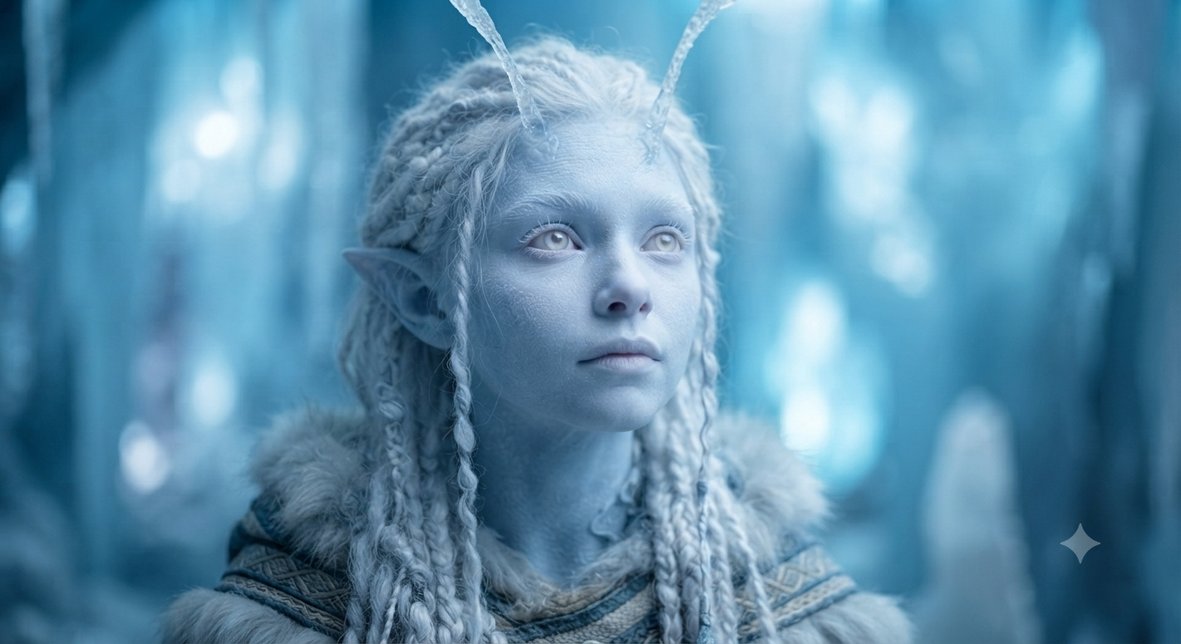
7. Aenar Influence
The Aenar, though few, hold disproportionate political weight:
- Their telepathic ethics influence clan law.
- Some clans seek Aenar marriages to gain prestige.
- Aenar pacifism creates tension with warrior clans.
Aenar clans are often treated as mystical advisors.
8. Clan Politics Are a Survival Algorithm
Andoria is a death world — cold, resource-scarce, and unforgiving.
Clans evolved as adaptive survival machines:
- Four-gender reproduction prevents genetic bottlenecks.
- Clan alliances ensure population stability.
- Honour codes prevent destructive conflict.
- Ritual combat resolves disputes without destabilizing society.
Clan politics are not just cultural — they are biological necessity.
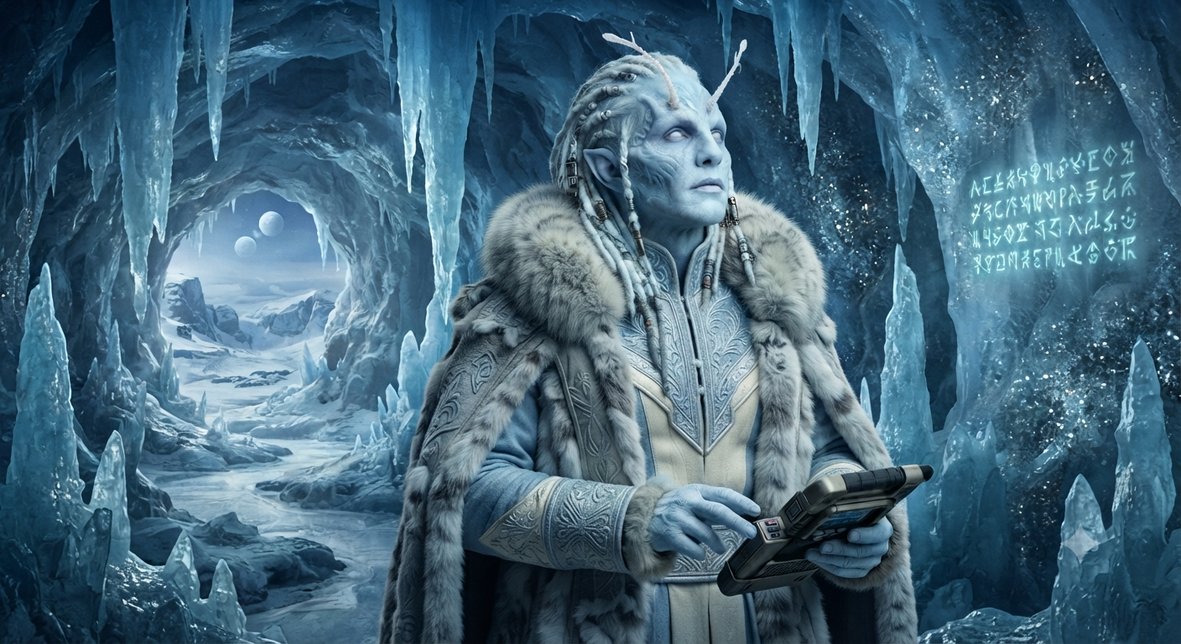
Aenar culture is a pacifistic, telepathic, subterranean tradition built on silence, harmony, and ethical clarity. They are the spiritual counterweight to the martial Andorians — a people who believe that thought itself is sacred, and that violence is a failure of the mind.
Aenar Culture: A Complete Ethnographic Profile
1. Identity & Core PhilosophyThe Aenar see themselves not as a separate species, but as the quiet heart of Andoria.Telepathy is universal, not a rare trait.
They believe truth is a natural state — deception is painful, discord is toxic.
Their pacifism is not passive; it is active moral discipline.
They practice mental stillness, a form of telepathic meditation that keeps their thoughts “clean.”
Aenar ethics revolve around three principles:
Harmony — thoughts should align with compassion.
Clarity — emotions should be acknowledged, not suppressed.
Non-violence — conflict is resolved through telepathic empathy.
They are not naïve; they simply believe violence is a failure of imagination.
2. Environment & Architecture
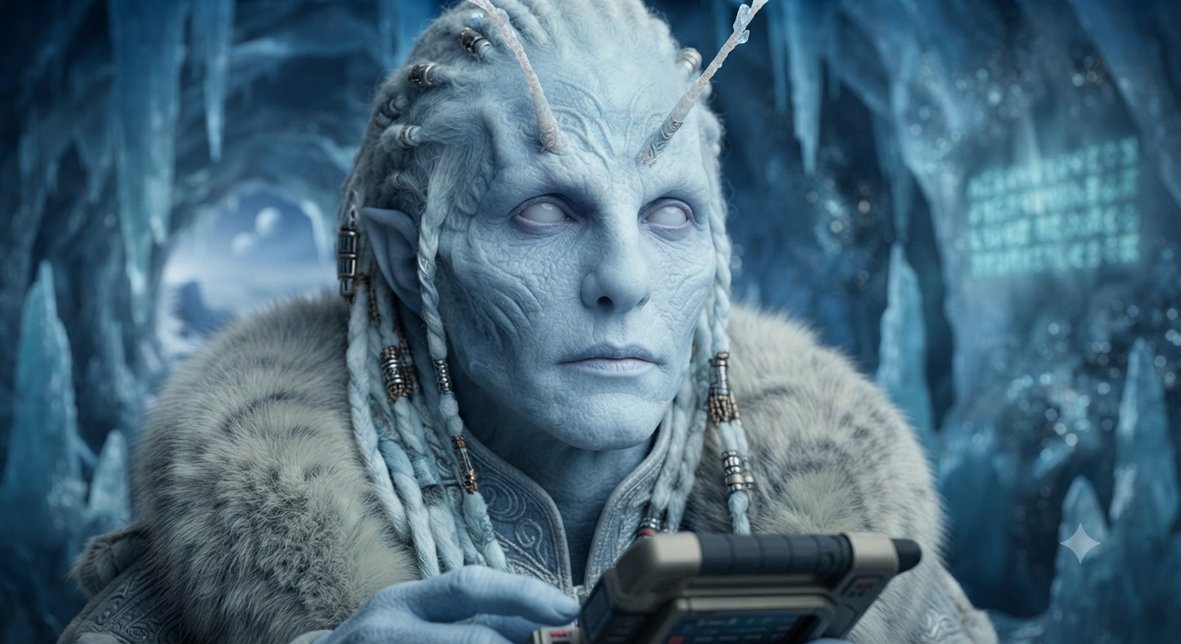
The Aenar live in the northern polar ice, far from Andorian cities.
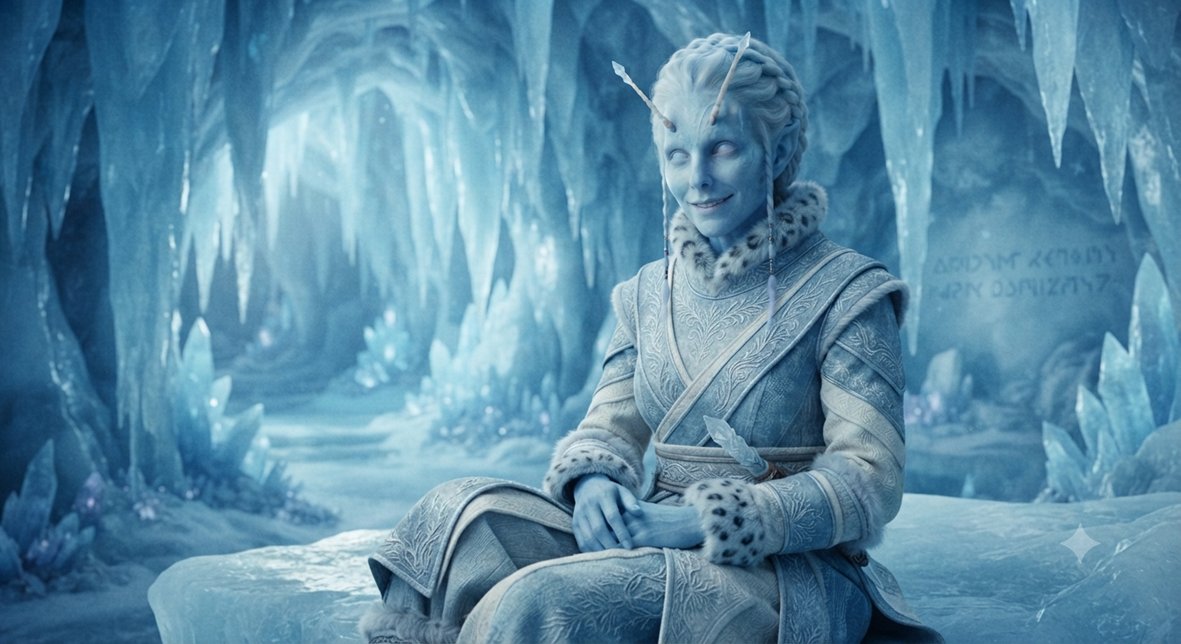
Homes carved into glacial caverns.
Structures shaped by sound, not sight — acoustics matter more than aesthetics.
Bioluminescent moss and crystal formations provide gentle illumination.
Temperature is extremely low; Aenar physiology thrives in deep cold.
Their settlements feel like cathedrals of silence.
3. Telepathic Culture
Telepathy is not a tool — it is the foundation of Aenar identity.
How they use it:
- Communication: subtle, emotional, layered.
- Conflict resolution: sharing memories to build empathy.
- Education: elders pass knowledge through guided telepathic “journeys.”
- Art: telepathic storytelling, shared dreams, emotional sculptures.
Ethical rules:
- Never enter a mind without consent.
- Never alter memory.
- Never use telepathy to manipulate emotion.
- Never read a child’s mind except for safety.
These rules are enforced socially, not legally — breaking them results in communal exile.
4. Social Structure
Aenar society is small — only a few thousand individuals.
- Elders guide ethical decisions.
- Dream-weavers create communal telepathic art.
- Memory-keepers preserve history through shared visions.
- Navigators (rare) use telepathy for starship coordination — the most famous example is the Aenar pilot of the drone ship in Enterprise.
They do not have clans like Andorians; instead, they have circles, fluid groups formed around shared emotional resonance.
5. Relationship with Andorians
Aenar and Andorians share ancestry but diverged culturally.
Andorians see Aenar as:
- Mystics
- Ethical advisors
- Living symbols of honour
- A reminder that strength is not only physical
Aenar see Andorians as:
- Passionate
- Courageous
- Sometimes reckless
- Capable of great empathy when guided
The relationship is symbiotic — Aenar provide moral clarity, Andorians provide protection.
6. Religion & Spirituality
Aenar spirituality is non-theistic but deeply mystical.
They believe:
- Thoughts leave echoes in the ice.
- Memories become crystal patterns in the caverns.
- The mind is a shared landscape, not an individual possession.
- Death is a dissolution into communal memory.
Their rituals involve:
- Silent gatherings
- Shared dream-visions
- Emotional harmonics
- Ice-carving guided by telepathic resonance
7. Aenar in the Federation Era
After rediscovery in 2154:
- Some Aenar join Starfleet as telepathic specialists.
- Aenar ethics influence Federation telepathic law.
- Aenar circles form advisory councils for Andorian clans.
- Aenar diaspora communities appear on Federation worlds with cold climates.
They remain rare, but culturally influential.
8. Aenar Culture Is Built for Survival
Their pacifism is not idealism — it is adaptation.
In the polar wastes:
- Violence wastes energy.
- Cooperation ensures survival.
- Telepathy prevents miscommunication.
- Silence preserves heat and mental focus.
Aenar culture is a survival algorithm optimized for extreme environments.
The thaan is the political spear-point of Andorian society — the gender associated with leadership, strategic vision, and external diplomacy. If the shen is the origin and the zhen is the anchor, the thaan is the navigator: the one who sets the clan’s direction, represents it to outsiders, and embodies its honour in public life.
The Political Role of the Andorian Thaan
1. The Thaan as the Clan’s Public Face
Thaans are culturally associated with Star, symbolising:
- Vision
- Wisdom
- Direction
- Honour in public life
This makes them the primary external representatives of the clan.
They are the ones who:
- Speak for the clan in inter-clan councils
- Represent the clan in Imperial Guard command structures
- Serve as diplomats to non-Andorian powers
- Act as the clan’s “face” in Federation politics
Where shens negotiate lineage and zhens safeguard continuity, thaans project the clan’s identity outward.
2. Strategic Leadership
Thaans often dominate the Spear Council, the clan’s military-political leadership body.
Their responsibilities include:
- Setting long-term strategic goals
- Managing clan militias and Guard liaisons
- Determining territorial claims
- Planning defensive and offensive strategies
- Coordinating with other clans during crises
Thaans are not impulsive warriors — that stereotype belongs more to chans. Thaans are strategists, trained to think in decades, not moments.
3. Honour and Legitimacy
Thaans carry the clan’s honour in ritual and political contexts.
They serve as:
- Champions in honour trials
- Speakers in reconciliation ceremonies
- Custodians of clan oaths
- Representatives in Federation diplomatic rituals
A thaan’s behaviour can elevate or disgrace the entire clan. This gives them enormous soft power — their reputation shapes political outcomes.
4. Thaan Role in Shelthreth Politics
Thaans are one of the two fertilizing genders, but their political role in reproduction is symbolic rather than logistical.
They influence shelthreth politics by:
- Approving or rejecting potential chan partners
- Ensuring shelthreth bonds align with clan strategy
- Acting as the “first fertilizing voice” in negotiations
- Representing the clan’s honour during reproductive treaties
If the shen controls origin and the zhen controls continuity, the thaan controls legitimacy.
5. Inter-Clan Diplomacy
Thaans are the primary diplomats in non-reproductive politics.
They negotiate:
- Military alliances
- Trade agreements
- Territorial boundaries
- Honour reparations
- Joint clan initiatives
Their diplomacy is direct, honest, and often intimidating — Andorians value clarity over subtlety, and thaans embody this cultural ideal.
6. Symbolism of the Thaan
Thaans are associated with:
- Star — guidance, destiny, illumination
- Wisdom — strategic clarity
- Honour — public integrity
- Leadership — the clan’s outward voice
In political rituals, thaans carry star-etched crystal rods, symbolizing direction and vision.
7. Thaan Role in the Federation Era
After Andoria joins the Federation:
- Thaans become Starfleet officers at high rates
- Many serve as command-track leaders
- Thaans act as Federation Council representatives
- They help shape interstellar defence policy
- They become cultural mediators between Andoria and other worlds
Their influence expands from clan politics to galactic politics.
8. Thaans Are the Political “Vector”
If zhens are the brake system and shens are the gatekeepers, thaans are the vector:
- They determine the clan’s direction
- They project its identity outward
- They negotiate its place in the wider world
- They ensure its honour remains intact
Without thaans, Andorian politics would be directionless, inward-looking, and strategically stagnant.
The chan is the political accelerant of Andorian society — the gender associated with passion, tactical action, and alliance-building through mobility. If the thaan is the clan’s vector, the shen its origin, and the zhen its anchor, the chan is the force-multiplier: the one who turns strategy into momentum, diplomacy into action, and reproductive treaties into living political bonds.
The Political Role of the Andorian Chan
1. The Chan as the Clan’s Tactical Engine
Chans are culturally associated with Fire, symbolising:
- Passion
- Momentum
- Tactical clarity
- Immediate action
Where thaans think in decades, chans think in moments — and this makes them indispensable in political execution.
They are the clan’s:
- Tactical officers
- Rapid negotiators
- Crisis responders
- Honour champions
- Mobility specialists (both socially and militarily)
Chans turn political intent into political reality.
2. The Chan in the Spear Council
Within the clan’s military-political leadership (the Spear Council), chans serve as:
- Tactical advisors — translating thaan strategy into actionable plans.
- Operational commanders — leading clan militias and Guard units.
- Rapid-response leaders — handling emergencies, raids, or honour disputes.
- Enforcers of clan law — ensuring treaties and oaths are respected.
Thaans set direction; chans make it happen.
3. Mobility as Political Power
Chans are the most mobile of the four genders — socially, politically, and reproductively.
This mobility gives them unique political leverage:
- They are often exchanged between clans to cement alliances.
- They serve as liaisons in inter-clan negotiations.
- They act as political messengers, carrying sensitive information.
- Their presence in another clan’s territory signals trust — or pressure.
A chan’s movement can shift political balance more quickly than any formal treaty.
4. Chan Role in Shelthreth Politics
As the second fertilising gender, chans have a crucial reproductive role — but their political influence comes from who they fertilize with, not the act itself.
Chans influence shelthreth politics by:
- Accepting or rejecting shen egg-rights.
- Negotiating their own placement in inter-clan reproductive treaties.
- Acting as the “flexible” partner in shelthreth formation.
- Serving as the bridge between clans during multi-clan unions.
If the thaan provides legitimacy, the chan provides connection.
5. Inter-Clan Diplomacy
Chans excel in short-form diplomacy — the kind that requires speed, emotional intelligence, and tactical clarity.
They handle:
- Honour disputes
- Emergency negotiations
- Rapid alliance formation
- Tactical coordination between clans
- Crisis mediation when passions run high
Where thaans negotiate treaties, chans negotiate moments.
6. Symbolism of the Chan
Chans are associated with:
- Fire — passion, energy, transformation
- Action — movement, momentum
- Connection — bridging clans
- Courage — facing conflict directly
In political rituals, chans carry flame-etched crystal blades, symbolising decisive action.
7. Chan Role in the Federation Era
After Andoria joins the Federation:
- Chans become Starfleet tactical officers at high rates.
- They serve as first-contact specialists, valued for emotional clarity.
- They act as inter-clan diaspora coordinators on Federation worlds.
- Some become Federation mediators, especially in high-tension negotiations.
Their mobility and passion make them ideal for interstellar diplomacy under pressure.
8. Chans Are the Political “Momentum System”
If zhens stabilise, shens originate, and thaans direct, chans move.
They provide:
- Momentum
- Tactical execution
- Emotional clarity
- Rapid alliance formation
- Crisis response
- Inter-clan mobility
Without chans, Andorian politics would be slow, rigid, and vulnerable to crisis.
The shen is the political spark of Andorian society — the gender that provides the egg, determines lineage, and shapes inter-clan alliances through reproductive diplomacy. If the zhen is the anchor, the shen is the origin point: the one whose biological role gives them enormous leverage over inheritance, prestige, and the future direction of the clan.
The Political Role of the Andorian Shen
1. The Shen as the Origin of Lineage
The shen produces the egg, which is the genetic foundation of every new Andorian life. This gives the shen a unique political authority:
- They determine which clan’s bloodline continues.
- Their egg-rights are treated as strategic assets.
- A shen’s choice of shelthreth partners can elevate or diminish a clan’s prestige.
Where the zhen controls continuity, the shen controls origin.
2. Egg-Rights as Political Currency
Egg-rights (the right to use a shen’s egg in a shelthreth) are one of the most powerful tools in Andorian politics.
Shens can:
- Grant egg-rights to strengthen alliances.
- Withhold egg-rights to punish rival clans.
- Negotiate egg-rights in exchange for territory, military support, or political concessions.
- Use egg-rights to maintain gender balance within the clan.
Because every child begins with the shen, their decisions shape the clan’s future composition.
3. The Shen in the Hearth Circle
Within the clan’s domestic leadership (the Hearth Circle), shens serve as:
- Strategists — deciding which shelthreth bonds benefit the clan.
- Negotiators — managing reproductive treaties with other clans.
- Advisors — guiding zhens on long-term lineage planning.
- Ethical arbiters — ensuring egg-rights are not abused for political coercion.
If the zhen is the stabilizer, the shen is the planner.
4. Inter-Clan Diplomacy
Shens are the primary diplomats in reproductive politics.
Their responsibilities include:
- Negotiating chan exchanges between clans.
- Determining whether a thaan or chan from another clan is acceptable for fertilisation.
- Ensuring shelthreth bonds do not create political imbalance.
- Managing disputes over egg-rights and lineage claims.
A shen’s decision can create:
- A new alliance
- A political merger
- A prestige boost
- Or a generational feud
Their choices ripple across decades.
5. Shen Influence in Clan Rivalries
Shens often act as power brokers in clan rivalries.
They can:
- Strengthen their clan by forming high-prestige shelthreth bonds.
- Undermine rival clans by refusing egg-rights.
- Create political leverage by offering egg-rights conditionally.
- Influence military alliances through reproductive diplomacy.
A shen’s refusal can be more devastating than a military defeat.
6. Symbolism of the Shen
Shens are associated with:
- Water — fluidity, adaptability, origin.
- Blood — lineage, ancestry, continuity.
- Initiation — the beginning of life.
- Diplomacy — negotiation, connection, alliance.
In political rituals, shens often carry water-crystal vessels, symbolising the flow of lineage.
7. Shen Role in the Federation Era
After Andoria joins the Federation:
- Shens become experts in multi-species reproductive law.
- They advise the Federation Council on cultural rights and gender-complex species.
- They oversee diaspora egg-rights registries across Federation worlds.
- Some serve as Starfleet cultural officers, mediating reproductive treaties for Andorian crews.
Their influence expands beyond Andoria into interstellar diplomacy.
8. Shens Are the Political “Gatekeepers”
If zhens are the brake system, shens are the gatekeepers:
- They decide who enters the clan.
- They determine which alliances become blood alliances.
- They control the flow of lineage.
- They ensure the clan’s future remains politically viable.
Without shens, Andorian politics would lose direction and strategic foresight.
The zhen is the political anchor of Andorian society — the gender that embodies continuity, legitimacy, and clan stability. Because the zhen is the gestator, the one who physically carries new life, they hold enormous cultural authority over inheritance, clan alliances, and the ethical use of reproductive power. Their political role is quiet, steady, and foundational.
The Political Role of the Andorian Zhen
1. The Zhen as the Clan’s Foundation
The zhen is considered the heart of the keth (clan). Their political authority comes from three sources:
- Gestation — they carry the embryo, making them the literal vessel of clan continuity.
- Custodianship — they oversee the health, upbringing, and early education of children.
- Stability — zhens are culturally associated with Earth, symbolizing grounding and permanence.
This gives them a unique political position: they decide the future of the clan by deciding who is born into it.
2. Control Over Reproductive Legitimacy
In Andorian politics, reproduction is not private — it is a strategic resource.
The zhen’s role includes:
- Approving or vetoing shelthreth bonds (four-gender reproductive unions).
- Determining whether a shelthreth is politically advantageous.
- Negotiating inter-clan reproductive treaties.
- Ensuring gender balance within the clan’s registries.
A clan with strong zhen leadership maintains stable gender ratios, which is the single most important factor in long-term political power.
3. The Hearth Circle: Zhen Leadership
Within the clan’s political structure, the zhen dominates the Hearth Circle, the governing body responsible for:
- Domestic policy
- Child welfare
- Gender balance
- Clan marriage law
- Internal dispute resolution
The Hearth Circle often has final say over whether a shelthreth is permitted — meaning zhens can override thaan or chan ambitions if they threaten clan stability.
4. Zhen Influence in Inter-Clan Politics
Zhens are the primary negotiators in reproductive diplomacy.
Their responsibilities include:
- Arranging chan exchanges between clans.
- Negotiating shen egg-rights for alliances.
- Ensuring that gestation rights remain within the clan unless politically necessary.
- Mediating disputes over children born from inter-clan unions.
Because gestation is sacred, zhens are treated as custodians of honour. Their decisions can elevate or destroy a clan’s political standing.
5. Zhen Authority in Crisis
During political or military crises, zhens act as:
- Stabilizers — preventing rash decisions by warrior-aligned genders.
- Archivists — preserving genealogies and clan histories.
- Ethical arbiters — ensuring that clan survival does not violate cultural law.
- Custodians of continuity — deciding whether reproduction should pause during wartime.
Their influence is subtle but decisive: they determine whether the clan’s future continues uninterrupted.
6. Zhen Symbolism
Zhens are associated with:
- Earth — stability, grounding, permanence.
- Strength — not martial strength, but endurance.
- Memory — continuity of clan identity.
- Custodianship — the protection of children and tradition.
In political rituals, zhens often carry crystal tablets representing ancestral lines, reinforcing their role as guardians of lineage.
7. Zhen Role in the Federation Era
After Andoria joins the Federation:
- Zhens become key advisors on reproductive ethics.
- They help draft Federation telepathic and reproductive law, especially regarding multi-gender species.
- They oversee diaspora clan registries across Federation worlds.
- Some serve as Federation Council aides, specializing in cultural rights legislation.
Their influence becomes interstellar, not just domestic.
8. Zhens Are the Political “Brake System”
Andorian politics are driven by passion — especially from thaans and chans. Zhens act as the regulatory counterweight:
- They slow down impulsive decisions.
- They enforce long-term thinking.
- They protect the clan from self-destructive ambition.
- They ensure continuity across generations.
Without zhens, Andorian politics would be chaotic and unsustainable.
The Hearth Circle is the internal-facing governing body of an Andorian clan — the council that manages lineage, reproduction, domestic law, gender balance, and internal harmony. If the Spear Council is the clan’s sword, the Hearth Circle is its heart, ensuring continuity, stability, and ethical coherence across generations.
The Andorian Hearth Circle
1. Identity & Purpose
The Hearth Circle (Keth-Thal) governs everything inside the clan:
- Shelthreth formation
- Gender-balance registries
- Child welfare and early education
- Domestic law and conflict resolution
- Internal ethics and honour maintenance
Where the Spear Council projects the clan outward, the Hearth Circle protects the clan’s inner life.
2. Composition of the Hearth Circle
The Hearth Circle is dominated by the two “female-aligned” genders, whose biological roles give them political authority over continuity.
Zhen leadership
Zhens are the gestators, associated with Earth and stability. They serve as:
- Custodians of lineage
- Guardians of continuity
- Final arbiters of shelthreth legitimacy
They are the Circle’s anchor.
Shen strategic influence
Shens are the egg-producers, associated with Water and origin. They act as:
- Negotiators of egg-rights
- Planners of lineage direction
- Diplomats in reproductive treaties
They are the Circle’s origin.
Thaan & Chan advisory roles
Thaans and chans participate but do not dominate:
- Thaans provide long-term strategic insight
- Chans provide tactical clarity and emotional perspective
They ensure the Circle’s decisions align with external clan strategy.
3. Core Responsibilities
A. Shelthreth Governance
The Hearth Circle has final authority over shelthreth bonds — the four-gender reproductive unions.
They decide:
- Which unions are permitted
- Whether a shelthreth strengthens clan alliances
- Whether gender balance is maintained
- Whether a shelthreth is ethically sound
A shelthreth without Hearth Circle approval is politically illegitimate.
B. Gender-Balance Management
Because Andorian reproduction requires all four genders, the Hearth Circle maintains:
- Clan gender registries
- Inter-clan gender exchange agreements
- Emergency gender-balance protocols
- Diaspora gender-tracking for off-world Andorians
This is one of the most politically sensitive duties in Andorian society.
C. Domestic Law & Conflict Resolution
The Hearth Circle handles:
- Internal disputes
- Honour conflicts within the clan
- Child custody issues
- Domestic ethics violations
- Reproductive treaty breaches
Their rulings are binding and enforced by the Spear Council.
D. Child Welfare & Early Education
Because zhens gestate and shens originate lineage, they oversee:
- Early childhood education
- Clan cultural transmission
- Emotional development
- Telepathic ethics (for Aenar-integrated clans)
Children are considered clan assets, not private property.
4. Ritual & Symbolism
The Hearth Circle’s authority is expressed through:
- Earth-crystal tablets (zhen authority)
- Water-vessels (shen origin)
- Star-etched rods (thaan insight)
- Fire-blades (chan passion)
Meetings are held in warm caverns near the clan’s First Hearth — symbolizing continuity and ancestral presence.
5. Relationship with the Spear Council
The Hearth Circle and Spear Council form a dual-governance system:
- The Hearth Circle governs inside the clan.
- The Spear Council governs outside the clan.
They must remain in harmony. If they disagree, the Ice-Archivists mediate.
This duality reflects Andorian cosmology: Earth and Water within, Star and Fire without.
6. The Hearth Circle in the Federation Era
After Andoria joins the Federation:
- Hearth Circles manage diaspora lineage registries across Federation worlds.
- They advise the Federation on multi-gender reproductive law.
- They oversee interstellar shelthreth treaties.
- They maintain cultural continuity for Andorians serving in Starfleet.
Their influence becomes interstellar, not merely domestic.
7. Non-Obvious Insight: The Hearth Circle Is a “Continuity Engine”
If the Spear Council ensures the clan matters, the Hearth Circle ensures the clan endures.
It provides:
- Stability
- Origin
- Continuity
- Ethical coherence
- Generational planning
Without the Hearth Circle, Andorian clans would be unstable, short-sighted, and reproductively fragile.
The Spear Council is the military-political command spine of every Andorian clan — the body where thaans provide long-range strategy, chans execute tactical action, and the clan’s honour, territory, and alliances are actively defended. If the Hearth Circle governs the home, the Spear Council governs the world outside it.
The Andorian Spear Council
1. Identity & Purpose
The Spear Council (Keth-Zhar) is the external-facing leadership of a clan.
Its core functions:
- Military command — overseeing clan militias and Imperial Guard liaisons.
- Strategic planning — determining territorial claims, defence lines, and long-term security.
- External diplomacy — negotiating alliances, honour reparations, and inter-clan treaties.
- Crisis response — mobilizing forces during raids, disasters, or political emergencies.
If the clan is a ship, the Spear Council is the bridge crew.
2. Composition of the Council
The Spear Council is deliberately multi-gendered, each role shaped by Andorian biology and cultural symbolism.
Thaan leadership
Thaans dominate the Council’s strategic tier:
- Long-range planning
- Inter-clan diplomacy
- Honour representation
- Command of Guard-linked units
They are the Council’s vision.
Chan tactical command
Chans form the Council’s tactical tier:
- Operational planning
- Rapid-response command
- Enforcement of treaties
- Honour-combat representation
They are the Council’s momentum.
Shen & Zhen advisory roles
Though less common in frontline command, shens and zhens serve as:
- Ethical advisors
- Lineage strategists
- Reproductive treaty negotiators
- Internal stability monitors
They ensure the Council’s decisions align with clan continuity.
3. Internal Structure
The Spear Council is divided into three functional chambers:
- The Outer Spear — military command, led by thaans and chans.
- The Inner Spear — diplomatic and honour-law specialists.
- The Ice-Speakers — archivists who maintain records of treaties, battles, and clan oaths.
Decisions require consensus between the Outer and Inner Spear, with Ice-Speakers acting as legal arbiters.
4. Responsibilities in Detail
Military Authority
- Commanding clan militias
- Coordinating with the Imperial Guard
- Maintaining defence grids and ice-tunnel fortifications
- Training honour champions and tactical units
Diplomatic Authority
- Negotiating territorial boundaries
- Managing inter-clan alliances
- Handling honour disputes
- Representing the clan to the Federation
Reproductive Politics
The Spear Council does not control shelthreth bonds directly — that is the Hearth Circle’s domain — but it advises on:
- Whether a shelthreth strengthens or weakens clan alliances
- Whether chan exchanges are strategically sound
- Whether thaan placement aligns with clan honour
Crisis Management
During emergencies, the Spear Council becomes the clan’s command centre, directing:
- Evacuations
- Honour-combat responses
- Diplomatic damage control
- Inter-clan coordination
5. Ritual & Symbolism
The Spear Council’s authority is expressed through:
- Crystal spears etched with clan history
- Star-fire insignia for thaans
- Flame-edge blades for chans
- Ice-tablets for archivists
Council chambers are built in glacial vaults, acoustically tuned for clarity — symbolic of transparent leadership.
6. The Spear Council in the Federation Era
After 2161, the Spear Council’s role expands:
- Coordinates clan representation in Starfleet
- Advises the Federation Council on Andorian security matters
- Oversees diaspora clan militias on Federation worlds
- Maintains interstellar honour law for Andorians abroad
Some Spear Councils even maintain off-world branches on cold Federation colonies.
7. Non-Obvious Insight: The Spear Council Is a “Directional Engine”
The Hearth Circle ensures the clan survives.
The Spear Council ensures the clan matters.
It provides:
- Direction
- Momentum
- Honour
- External identity
- Strategic continuity
Without the Spear Council, Andorian clans would be insular, reactive, and politically stagnant.
Ice Archivists are the memory-keepers, legal scholars, and ritual arbiters of Andorian clans — the gender-mixed order responsible for preserving treaties, genealogies, honour codes, and the deep cultural history carved into the ice itself. They are the quiet power behind both the Hearth Circle and the Spear Council, ensuring every decision aligns with ancestral law and clan continuity.
The Andorian Ice Archivists
1. Identity & Purpose
Ice Archivists (Zhar-Thal) are the custodians of memory — not just historical memory, but legal, genealogical, and ritual memory.
Their core functions:
- Preserve clan genealogies
- Maintain honour-law records
- Archive treaties, shelthreth bonds, and lineage rights
- Serve as legal arbiters in disputes
- Interpret ancestral precedent for modern politics
They are the clan’s institutional continuity, ensuring that passion, strategy, and reproduction all remain anchored in law and tradition.
2. Where They Work: The Ice Archives
The Archives are carved deep into the clan’s ancestral glacier.
Features include:
- Crystal-etched tablets containing centuries of clan law
- Bioluminescent moss illuminating genealogical chambers
- Resonance vaults where sound carries perfectly for ritual recitation
- Memory-caverns where telepaths (especially Aenar) store shared visions
The Archives are considered sacred ground — even the Spear Council cannot enter without ritual permission.
3. Composition & Training
Ice Archivists come from all four genders, but the roles tend to align with their cultural strengths:
- Zhens — continuity, custodianship, child-lineage records
- Shens — origin, egg-rights documentation, shelthreth mapping
- Thaans — strategic interpretation of historical precedent
- Chans — enforcement of honour rulings and treaty compliance
Training includes:
- Legal history
- Clan genealogy
- Ritual recitation
- Ice-carving inscription
- Aenar telepathic ethics (for mixed clans)
Archivists are chosen young and trained for decades.
4. Responsibilities in Detail
A. Genealogical Authority
Archivists maintain:
- Clan lineage charts
- Gender-balance registries
- Shelthreth histories
- Inter-clan reproductive treaties
Their records determine inheritance, legitimacy, and political continuity.
B. Honour-Law Interpretation
They interpret:
- Ritual combat rulings
- Honour disputes
- Clan oaths
- Territorial claims based on ancestral precedent
Their decisions are binding.
C. Legal Arbitration
Archivists act as neutral arbiters in:
- Inter-clan conflicts
- Shelthreth disputes
- Egg-rights negotiations
- Chan-exchange disagreements
They are the closest thing Andorians have to judges.
D. Memory Preservation
Archivists preserve:
- Oral histories
- Telepathic visions (with Aenar assistance)
- Crystal-etched records
- Clan myths and cosmology
They ensure the clan’s identity survives across centuries.
5. Ritual Role
Ice Archivists preside over:
- Shelthreth approval ceremonies
- Honour-combat validation
- Clan oath renewals
- Territorial claim recitations
- Federation-era cultural rights declarations
Their presence legitimizes any major political act.
6. Relationship with Other Clan Institutions
With the Hearth Circle
They provide:
- Legal precedent
- Lineage verification
- Ethical guidance
- Reproductive treaty documentation
The Hearth Circle cannot approve a shelthreth without Archivist confirmation.
With the Spear Council
They provide:
- Historical context for territorial claims
- Honour-law rulings
- Treaty enforcement records
- Strategic precedent from past conflicts
The Spear Council cannot declare war or alliance without Archivist validation.
7. Ice Archivists in the Federation Era
After 2161:
- They help draft Federation multi-gender reproductive law
- They maintain diaspora clan registries across Federation worlds
- They serve as cultural rights advisors to the Federation Council
- Some become Starfleet legal officers, specializing in Andorian honour law
Their influence becomes interstellar.
8. Ice Archivists Are the “Constitution” of Andorian Society
If the Hearth Circle is the heart and the Spear Council the spear, the Ice Archivists are the constitution:
- They define legitimacy
- They preserve identity
- They regulate continuity
- They anchor passion and strategy in law
- They ensure the clan never forgets who it is
Without them, Andorian politics would collapse into chaos, passion, and short-term thinking.
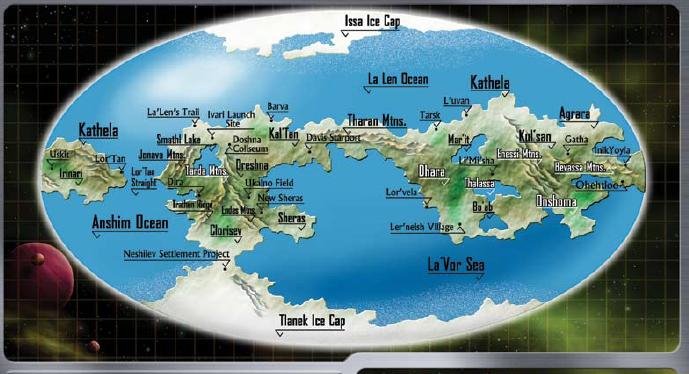
Both the Aenar and Andorians are a related 4 gender species from the moon Andoria, the males being either Thaan or Chan and the females are Zhen or Shan. Andorians are passionate and this comes out in both their militaristic attitude and artistic qualities. Andorians, like Klingons, have a strong sense of honour and value honesty. Andoria orbits the ringed gas giant Andor and has a polar climate. A sub-species of Andorians, the Aenar, live in the Northern Wastes. During the summer the temperature might creep above freezing for a few days, a typical temperature of minus 28 Celcius was common. Andoria has strong magnetic poles around the Northern Wastes that jam sensors. Andoria has a capital city called Laikan and a major industrial city called Laibok.
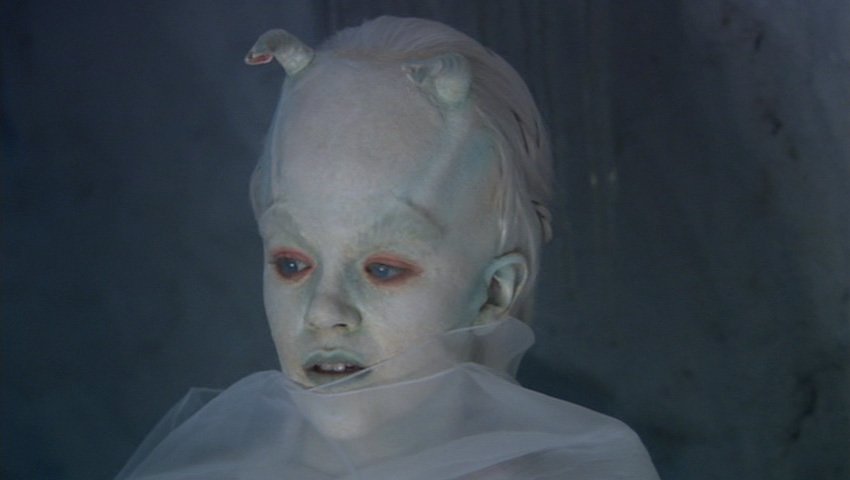
The Andorians have a blue skin and white hair, whereas the Aenar are an albino sub-species born with congenital blindness but immense telepathic abilities. The Aenar were thought to be extinct until their discovery by Jonathan Archer. Even today the numbers of Aenar are low, preferring to live in pacifistic isolation in their subterranean cities. Some have speculated this sub-species may even become 'extinct' through interbreeding with the Andorians, but this has shown not to be true to-date. Aenar can create false images in the minds of most other races, their abilities being able to overwhelm all but the most adept telepaths.
Andorian and Aenar antennae serve both as a balance sensing organ and also convey the emotional state of the individual. Antennae drawn back indicate anger, whilst upright rapidly can show surprise. Andorian skin tones differ with ethnic groups, ranging from pale blue, almost white up to deeper blue. Andorians have a higher metabolic rate to humans. Andorian names show the gender and clan of the individual, for instance TharinJar ch'Thas is a Chan from the Thas clan. The need for all four genders in order to procreate has caused population difficulties.
 Whilst Andorians are warriors and passionate, the Aenar are devout pacifists. Most Aenar refuse to join Starfleet as it is perceived to be an organisation that still possesses weapons. Starfleet Medical has a portion of Aenar who specialise in mental treatments, they serve on hospital ships and medical facilities. Research Station Psi 4 is one such facility, with Lieutenant Commander V'riel serving as the deputy commander of the base. Andorians, by contrast, can be found in most of the defensive system development facilities in the Federation. A sizeable orbial construction facility hangs over Andoria. Corporations such as Massive Dynamic and Omni-Consumer Products have their main defence research facilities at Andoria.
Laikan was the scene of Ambassador St John Talbot's one failure: to negotiate between immigrant miners from Charulh and the native Andorians. A misinterpretation of Charulhan culture cost the life of the kidnapped Governor's son. Talbot was 're-assigned' to Nimbus III in 2280 as a result of this. Andorians place a high value on family and the loss of a valued son was enough to pull strings to get Talbot re-assigned to a dead-end peripheral role. One major part of Andorian culture is the Ushaan - the Andorian honour code. Duels to the death with ice mining tool called "Ushaan-tor". The Ushaan is determined by over 12000 amendments, including the need to have children to continue the Clan or an injury sufficient enough to prevent combat continuing. It can be called over a slight.
Aenar, whilst having the four genders of an Andorian, do not have the Clan structure. They have a reserved disposition that has led to them concealing their cities; the passionate, violent tendencies of the Andorians were distasteful to the telepathic Aenar who could sense every emotion. Aenar share the Andorian value of family and there was cross-cultural interbreeding from when the two species rediscovered each other. Stfleet Medical believes at least some of the traits of Aenar are recessive, which is where the proposal came forward that the Aenar may eventually face extinction, as Neanderthal man did with Homo sapiens.
 Andorians have frequently become senior officers in Starfleet, the loyalty that was once felt towards the Imperial Guard of the old Andorian Empire was now felt towards Starfleet. TacFleet has especially become the part of Starfleet with a disproportionate number of Andorians. Several of the flag officers of Starfleet are Andorian, including some of the Fleet Admirals.
Fleet Admiral ThanaTan Th'raan
Fleet Admiral ThanaTan Th'raan leads the Third Fleet of Starfleet. His flagship is the Excelsior class Eagle, named for the Constitution class starship that had been extensively crewed by Andorians. Th'raan had a long career up to this point on the Belknap, Ch'lara, Alliance and Hood, amongst others. The Admiral had spent some time as Academy Commandant and Admiral (Flag Officer Space Training). Th'raan was called back to active service for the Romulan crisis and has remained with the Third Fleet since then.
JhelenPa Zh'lera
JhelenPa Zh'lera is the current Head of Omni-Consumer Products' Weapons Division based on Andoria. A former Security Operations officer in Starfleet, Zh'lera reached the rank of Commander after a active career in TacFleet. She never discusses her career in any detail, but it is thought she was part of the elite top end of the Security Operations, performing classified missions that are never admitted to even today.
The Head Office of OCP in Detroit head-hunted Zh'lera for her military knowledge and in-the-field experience. Zh'lera was a natural leader and possesses both the charismatic looks that PR enjoys as well as the presence that conveys being in charge. Had she stayed in Starfleet, she would have made Captain; Omni-Consumer Products needed to appeal to her sense of heing the Andorian people - and the Federation - from leading the production of defence technology.
JhelenPa Zh'lera accepted their offer and looks as much at home in a well-tailored suit, promoting OCP and its products, as she does in archive footage in a Starfleet uniform. With her connections in Starfleet hierarchy, Zh'lera has managed to get contracts for OCP via the decisions of admirals. The facilities at Andoria range from research laboratories on the planet surface as well as orbital facilities that can either refit or build starships. Prototypes and production model starships have been produced from these facilities at Andoria.
Modern Andorian History:
2294 - Ambassador M'giia continues diplomatic efforts with the Klingons, the noble warrior similarities between the two races being seen as a common ground in which to work.
2297 - Andorian colony of Zh'riis successfully repelled an assault by the Tholians. It was a prime display of the Andorian warrior spirit. Chancellor Azetbur of the Klingon Empire was said to have expressed admiration when she read reports from the battle.
Aenar male names: Giphat Islyp,Palasho Velhyz, Shroz Avyzi
Aenar female names: Dedyn Aphali, Lindin D'jhyv, Lojhla D'shyv, Lophla G'zaph, Lysza Eltyniph, Najhra Yzrop, Nyton Innasyv, Zospha Vihr